MEET THE ARTIST: TOM MORRIS
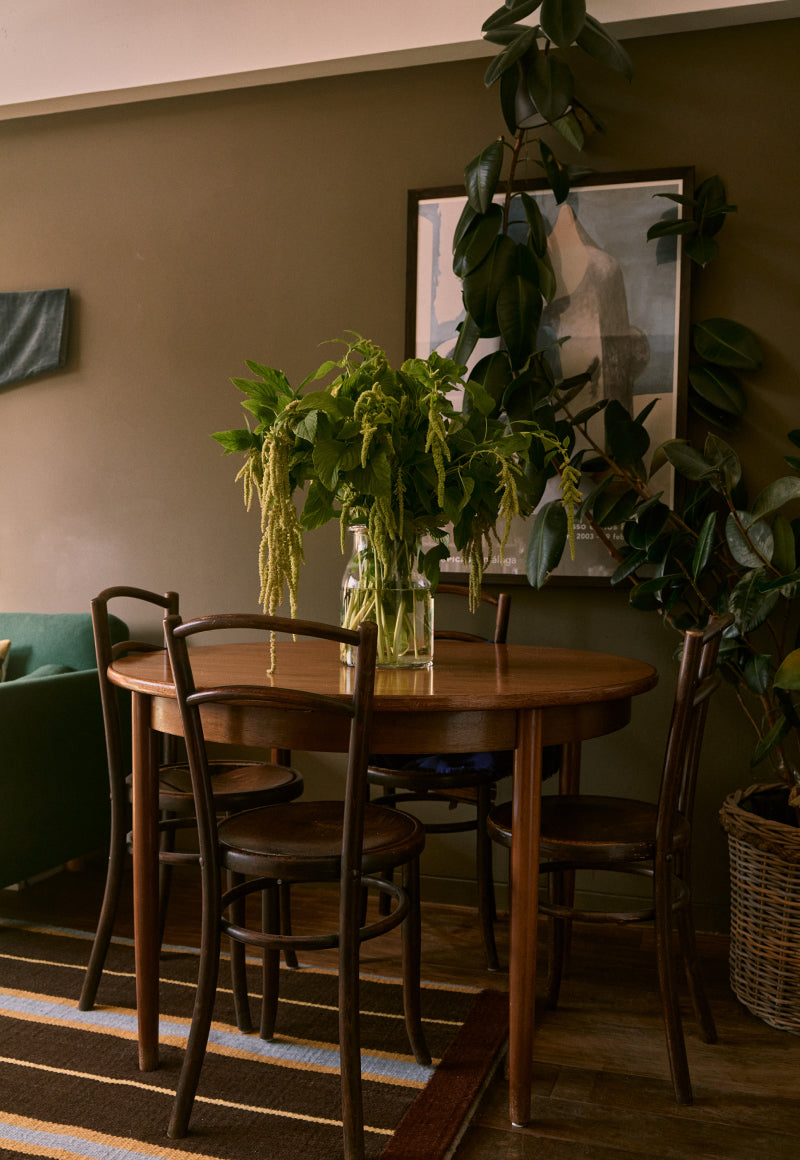
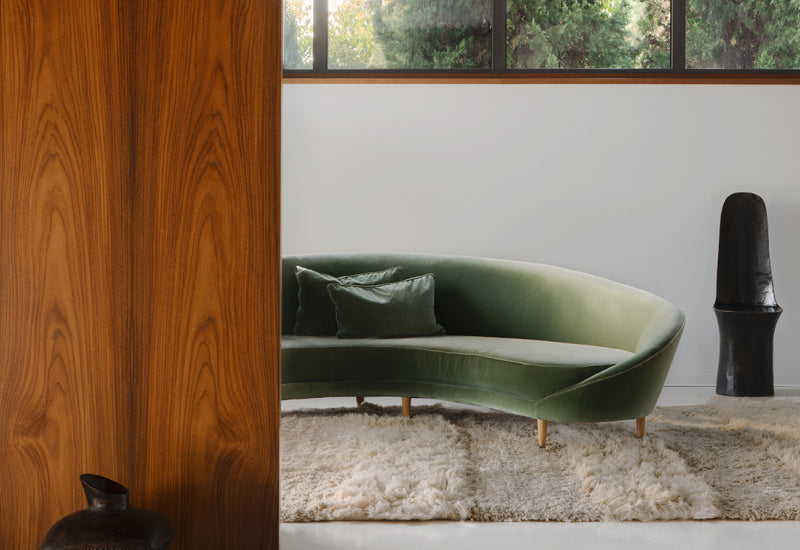
Tom Morris founded interior design firm Morrisstudio in 2019, working on residential and retail projects from its base in London. CLOTH is his first product collection: six flatweave rugs drawn from British textile traditions.
“One of the stripes was inspired by a 1960s tie I own. Another came from a beach deckchair I remember my grandmother having near the coast where she lived.”
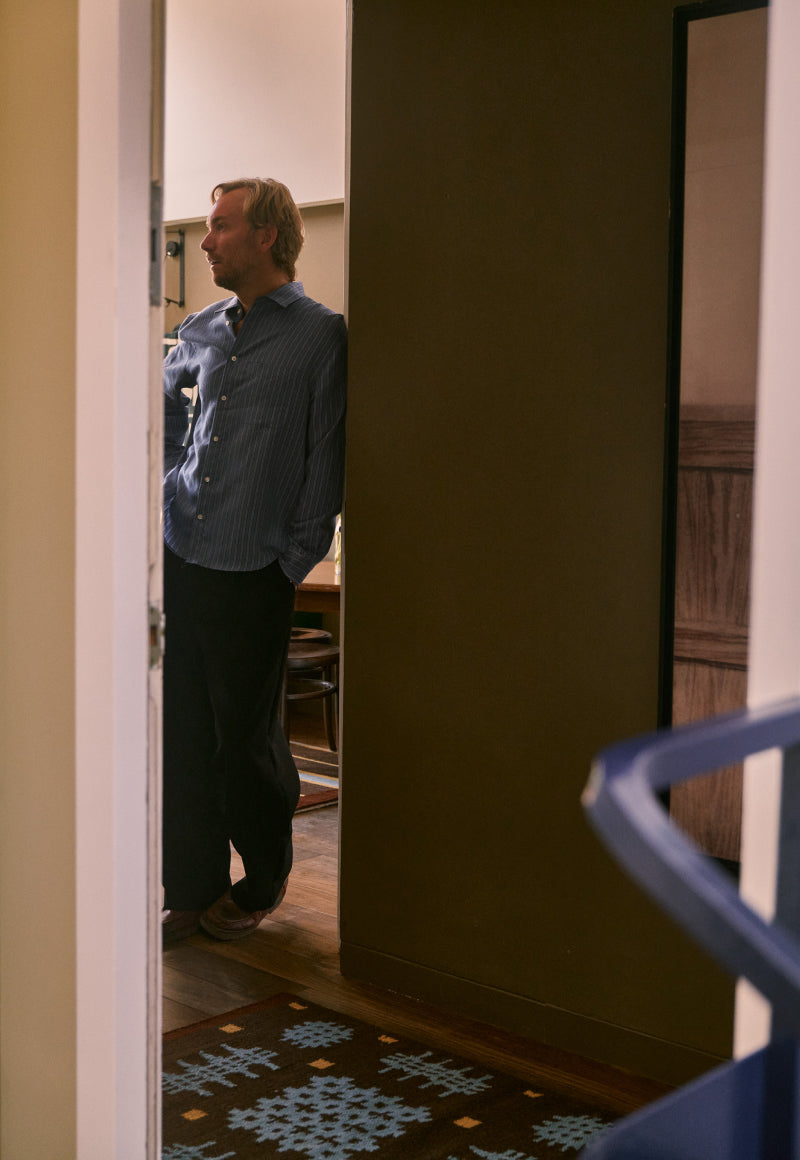
You spent a decade as a design editor before designing anything yourself. What did you take with you?
With my background in journalism, a sense of storytelling – having gotten to know a client very well, their history, taste, interests – is really important to me. We like every element in a home to have some root to the client so that things never feel arbitrary. I’m primarily rooted in Modernism: colour, materials, nothing pointless or decorative without any real need.
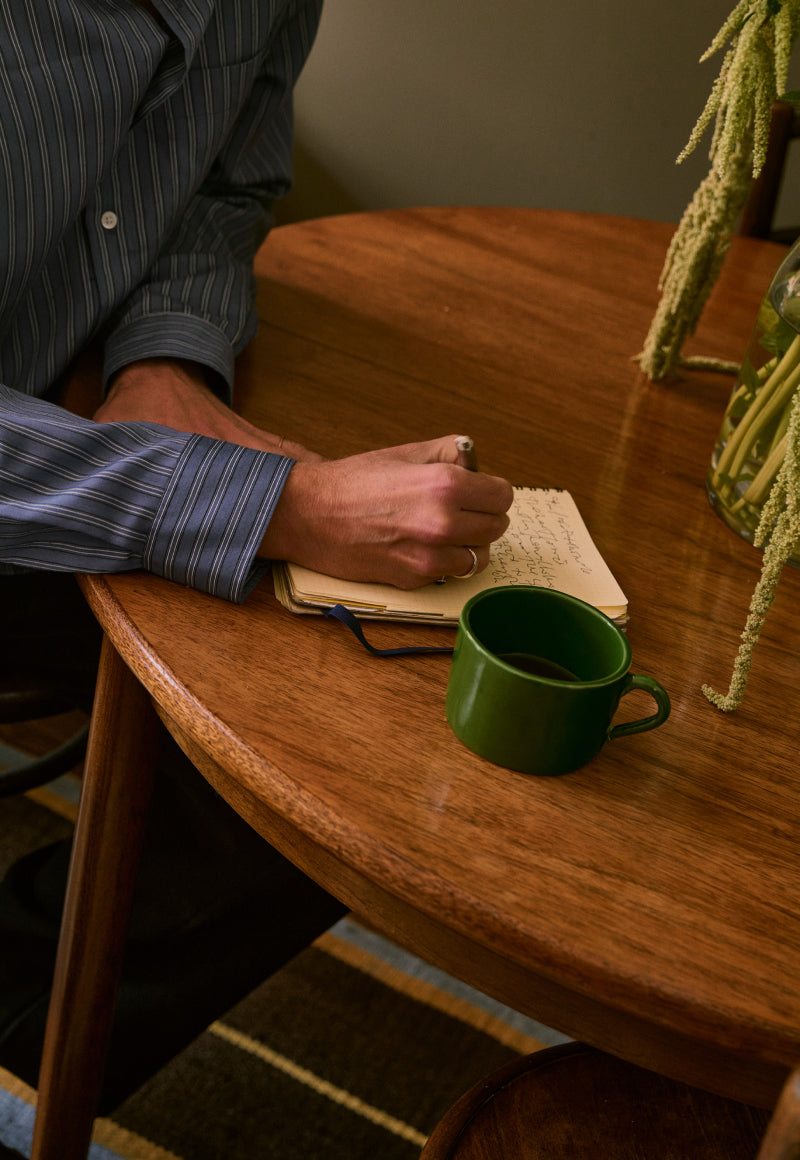
How would you describe the CLOTH collection?
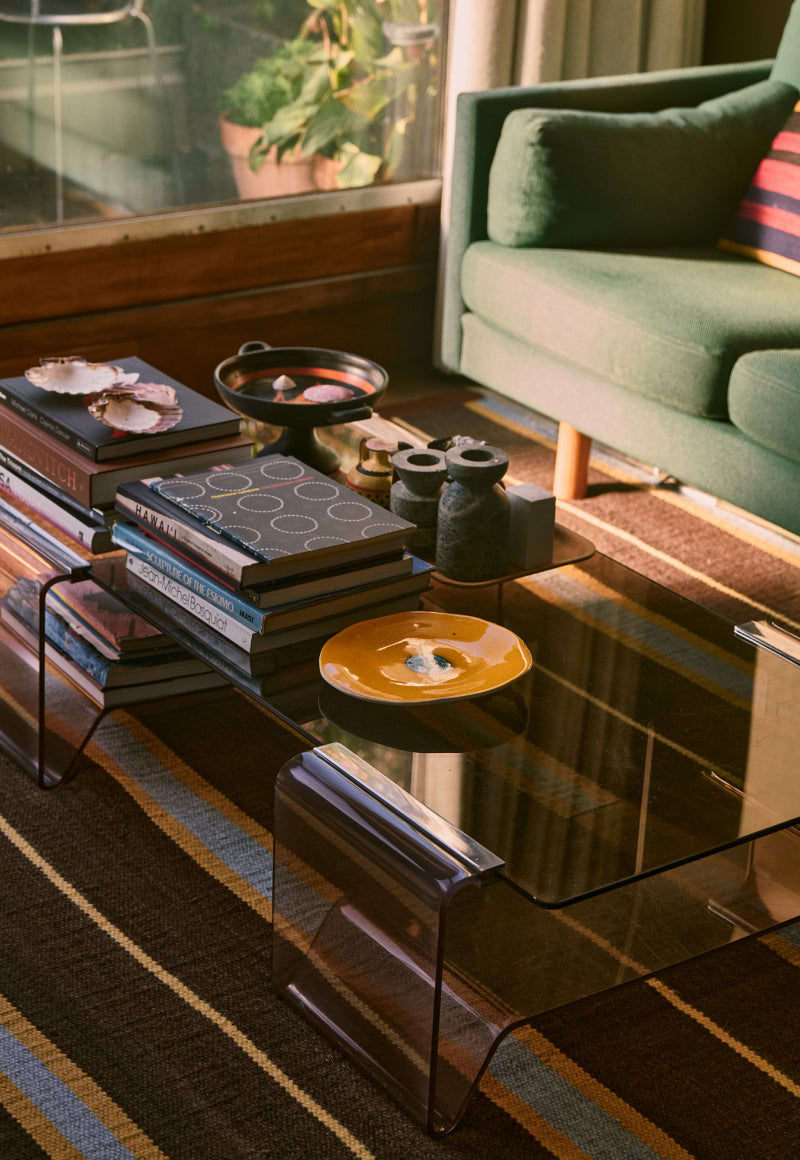
The collection is a celebration of different craft traditions in Britain. It’s on the one hand celebrating the textiles of Wales, where my mother’s family is from, and also those of England on my father’s side. We were very interested in the different ways stripes exist there: everything from Savile Row tailoring to deckchairs to horse and motor racing.
The colours are specific in a way that suggests they come from somewhere. My natural inclination is always to a moodier, more masculine palette. We really looked to different historical references for the rugs though: one of the stripes came from a 1960s tie I own, another came from a garden deckchair I remember my grandparents owning. The Welsh rugs looked at the natural landscape of the country: daffodil yellow and the blue and green of the north Wales coastline.
THE BARBICAN
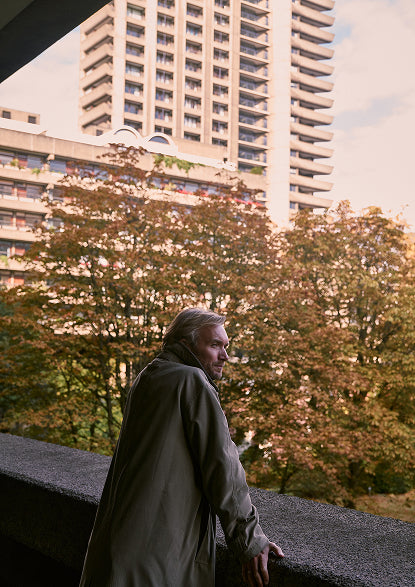
The area Tom Morris calls home is the Barbican Estate, one of London’s most distinctive architectural landmarks. Defined by its monumental concrete structures, elevated walkways and hidden gardens, this Brutalist enclave feels like a city within a city. A place where raw architecture meets unexpected greenery, and where art, culture and everyday life exist in a world of their own.
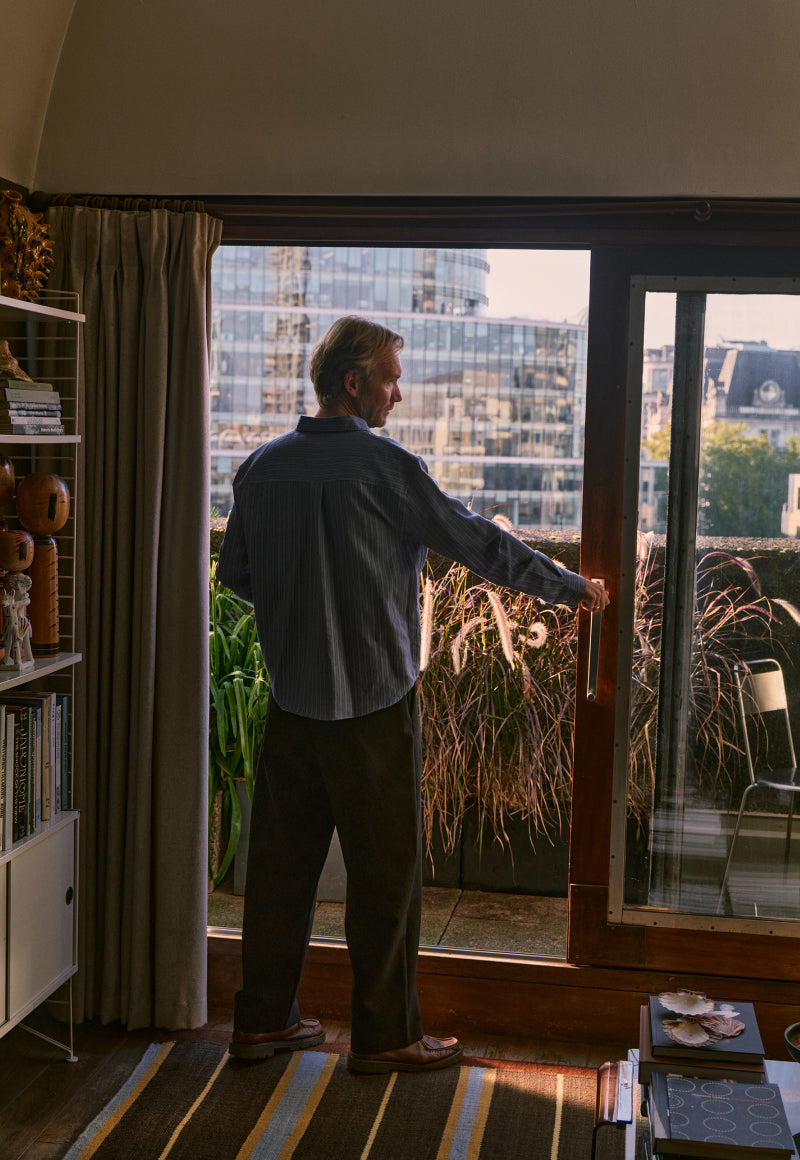
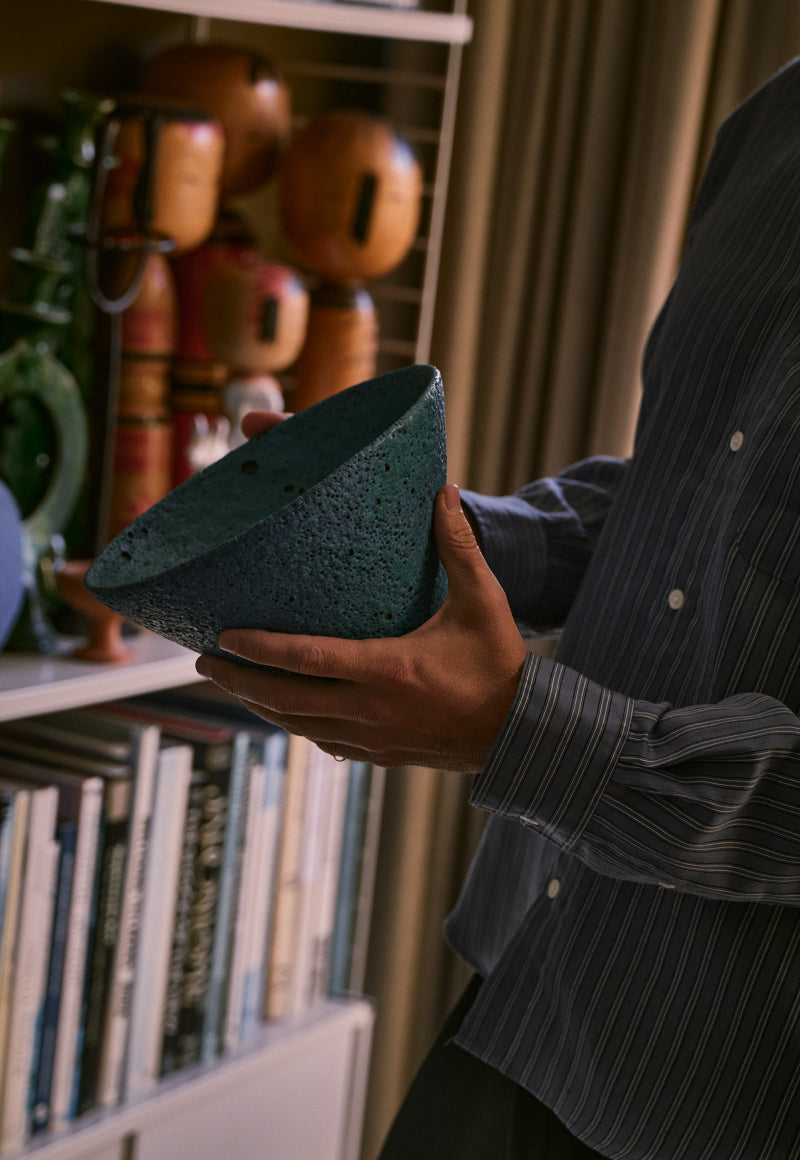
The rugs are woven on a pitloom, partly sunk into the floor, with the weaver’s feet guiding the warp. How did the process unfold, from research to finished weave?
It’s been fascinating to work with LAYERED on the production. I use flatweaves a lot in my projects, but to really discover the technical processes behind them, and let that guide what is made in the long run, was very interesting. As part of the research stage we also looked beyond Britain, at how textiles and cloth manifest around the world in so many different ways: Japanese boro patchwork denim, the patterns of the Ewe people of West Africa, quilting traditions in North America. It’s been very interesting to see some of the similarities across cultures when things are stripped back to purely their form.