MEET THE ARTIST COLLINA STRADA
Collina Strada isn't just a fashion label, it's also a platform for social issues and awareness. Created by Hillary Taymour, her main concern is staying true to her craft, and staying on course to becoming a fully sustainable and radically transparent brand in the near future.
In a new collaboration with LAYERED, Hillary discusses environmental urgency, subcultural heritage, and why a room should never feel overly composed.
"In design, I'm interested in creating tension between opposing ideas: beauty and discomfort, fragility and strength, fantasy and realism. I think fashion and design should evoke emotion and individuality rather than perfection."
Collina Strada occupies a singular space in contemporary fashion—part eco-conscious manifesto, part playground for emotional self-expression. How do you define the driving ethos behind the brand
At its core, Collina Strada is a platform for self-expression, sustainability, and emotional storytelling. It's about creating pieces that feel deeply personal while quietly provoking broader conversations around environmental and social responsibility. We balance beauty with imperfection, traditional craft with technical innovation, and humor with sincerity. I've always wanted the brand to feel alive, reflecting the complex, multifaceted nature of the people who wear it.
Your trajectory began with handcrafted accessories before expanding into a fully realized world. At what point did environmental accountability become inseparable from your vision?
What started as a small accessories project naturally evolved into an entire ecosystem of clothing, casting, and narrative. Simultaneously, I became hyper-aware of fashion's environmental footprint. Sustainability quickly stopped being an add-on and became central to the creative process itself—working with deadstock fabrics, rethinking production loops, and approaching design with material responsibility. The journey has been about proving that conscious design doesn't require sacrificing emotion, individuality, or creative ambition.
The collection bridges runway narratives and domestic spaces, featuring motifs from your AW26 show alongside sculpted silhouettes. How did you approach this dialogue?
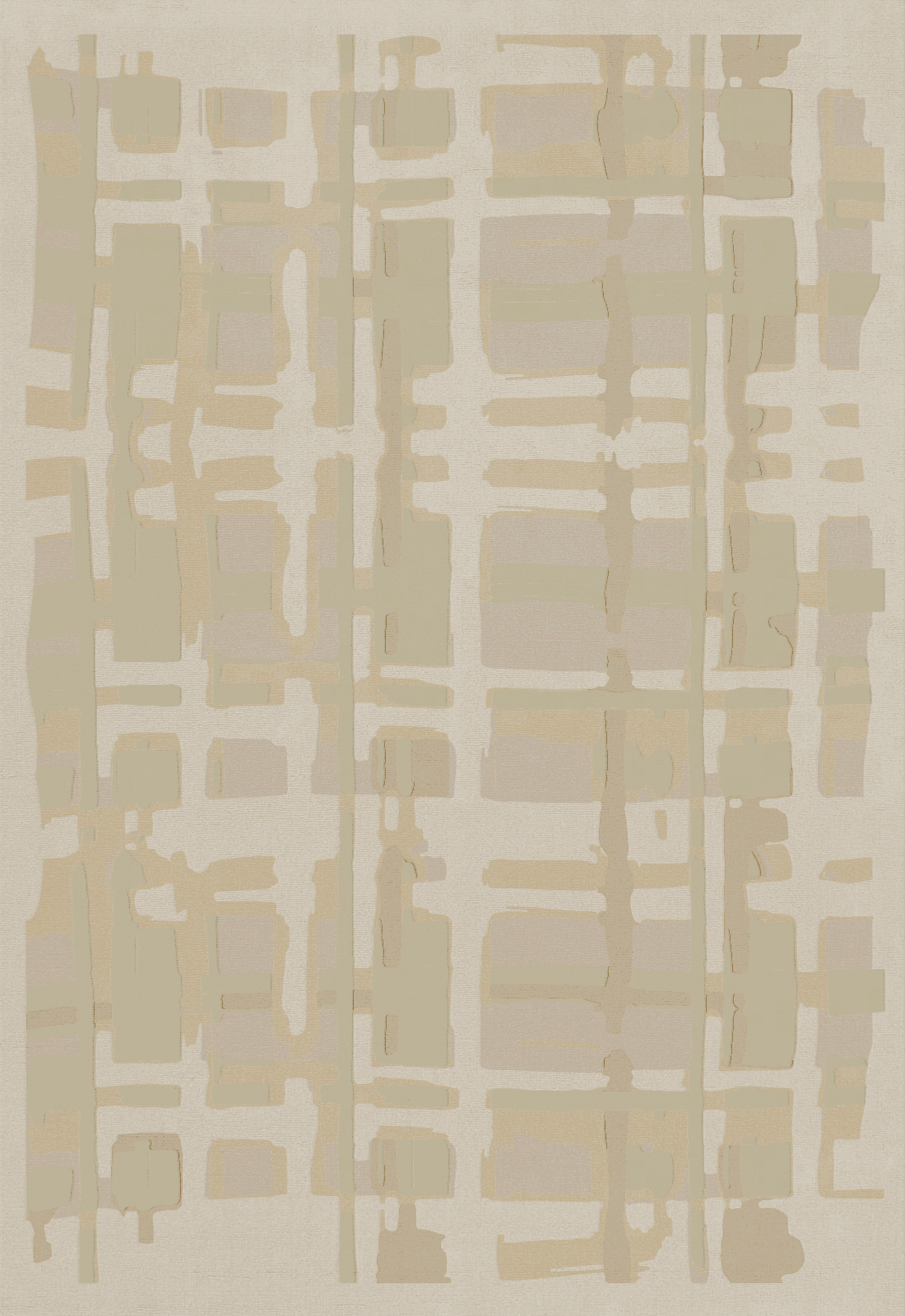
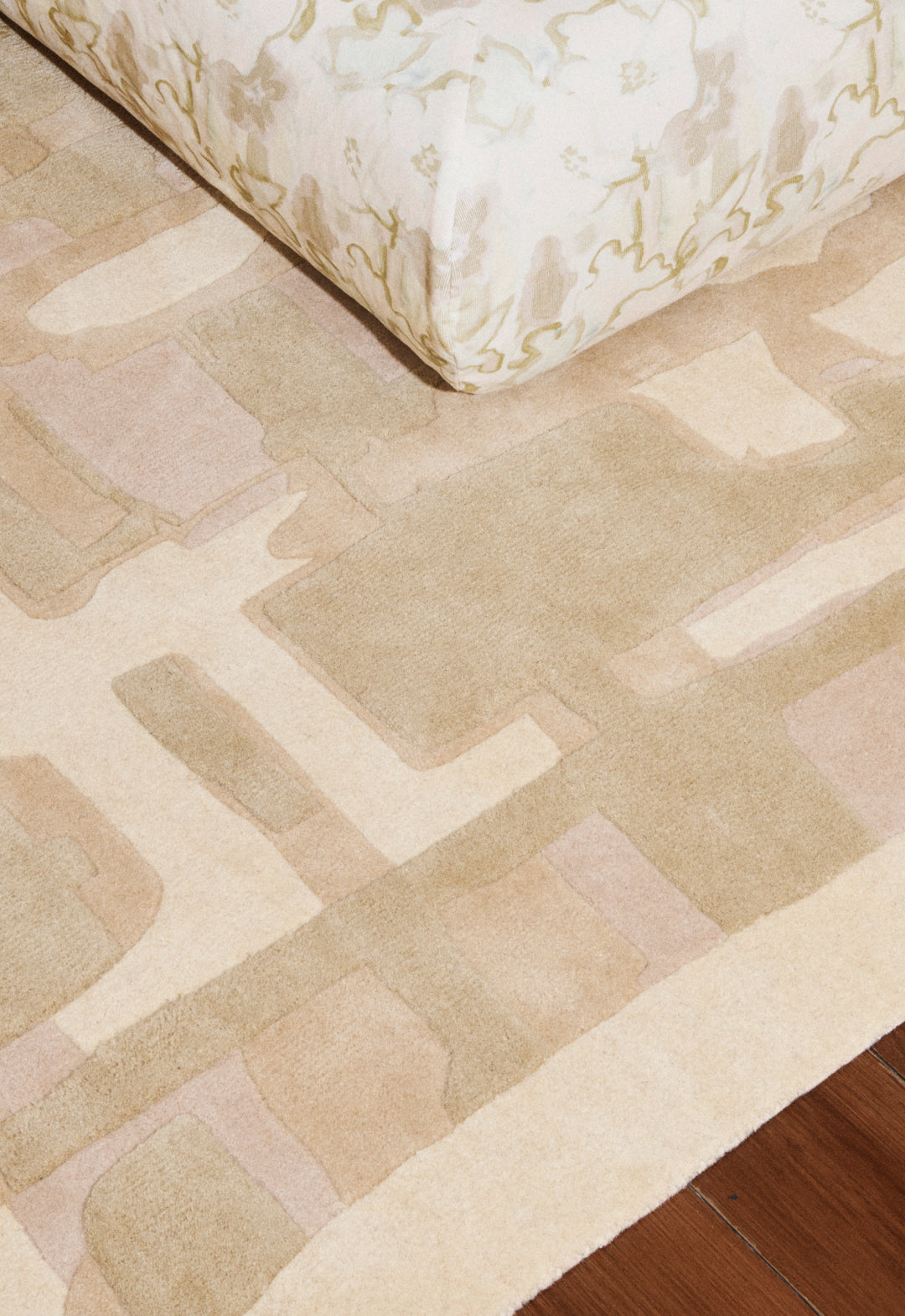
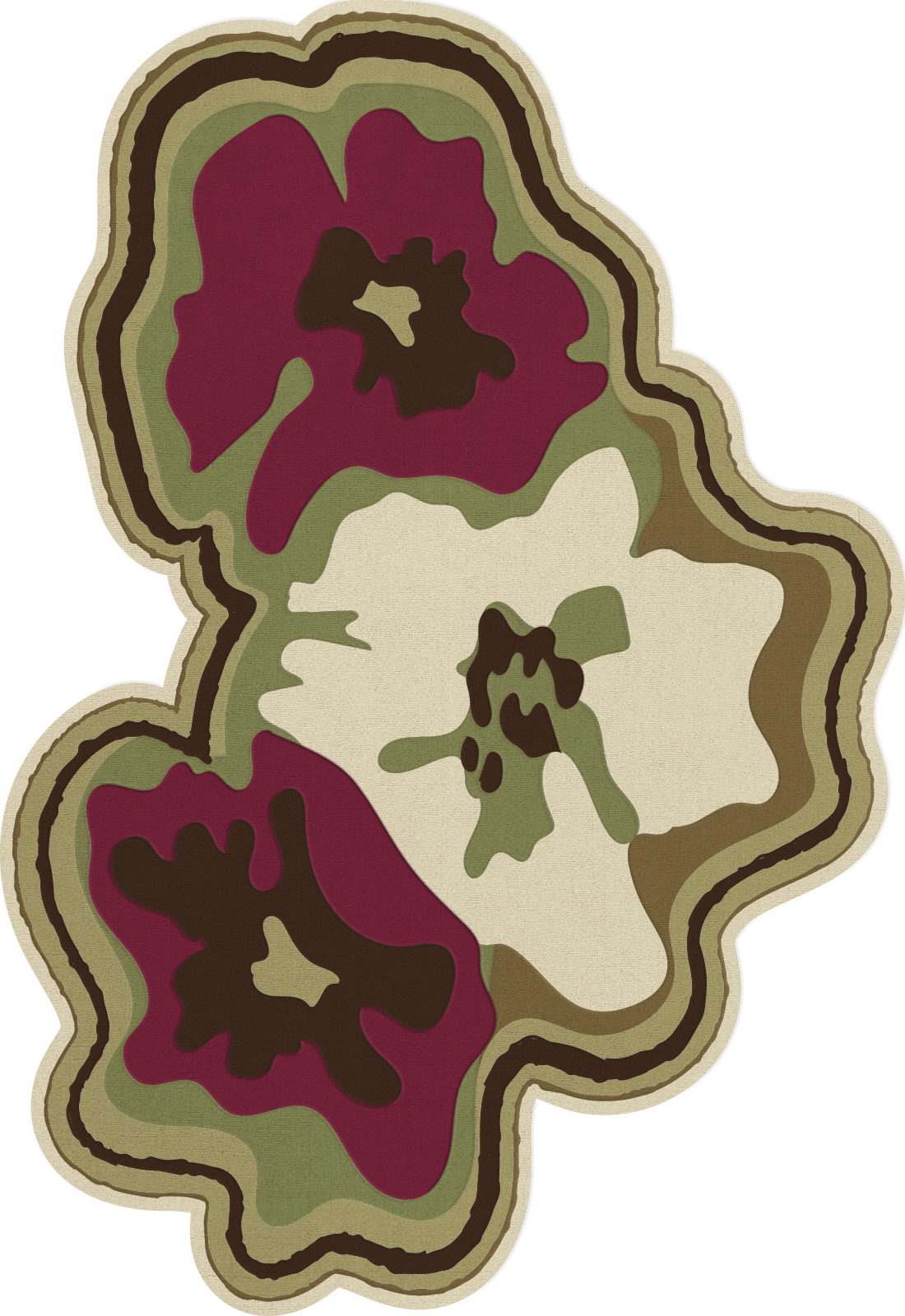
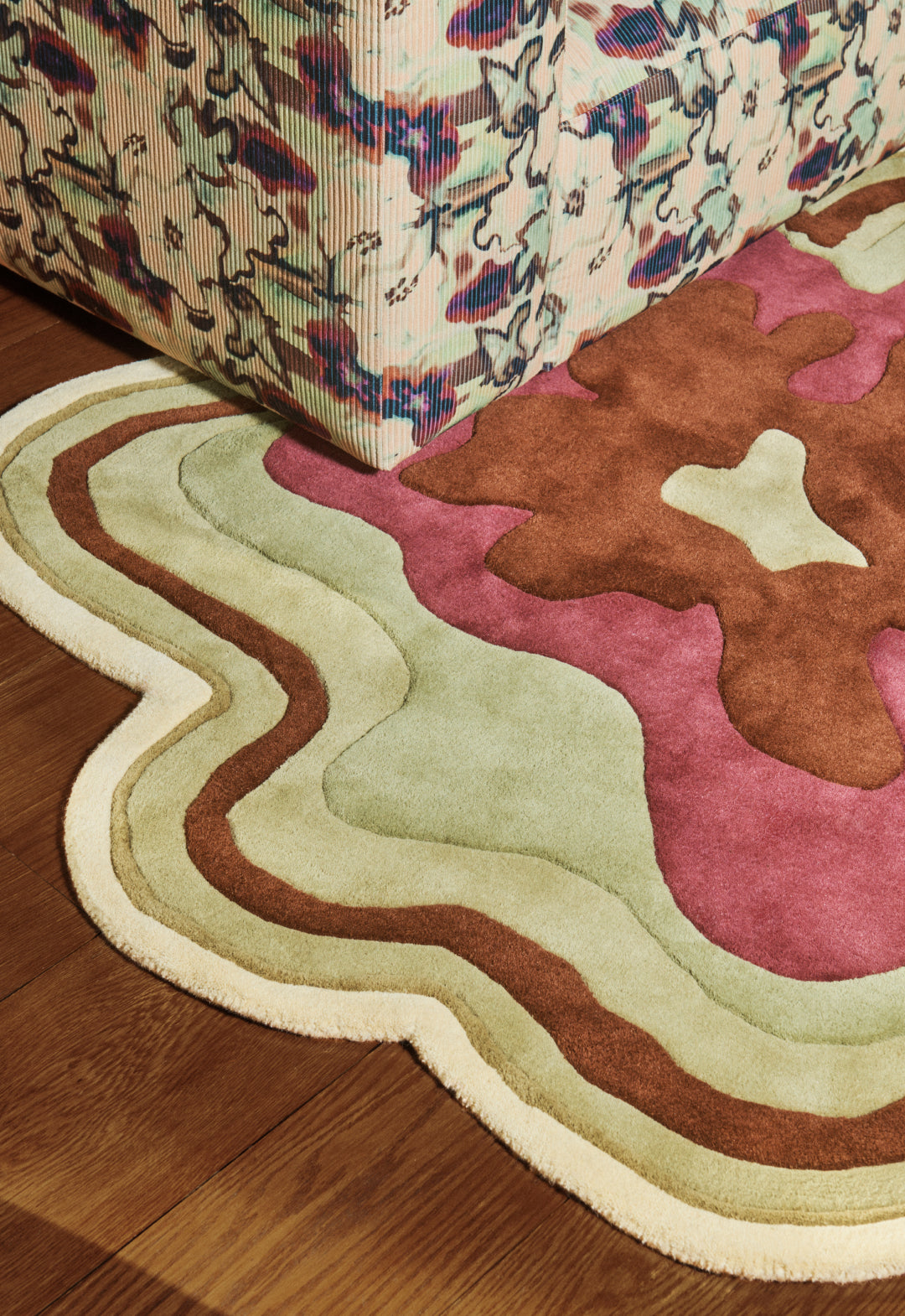
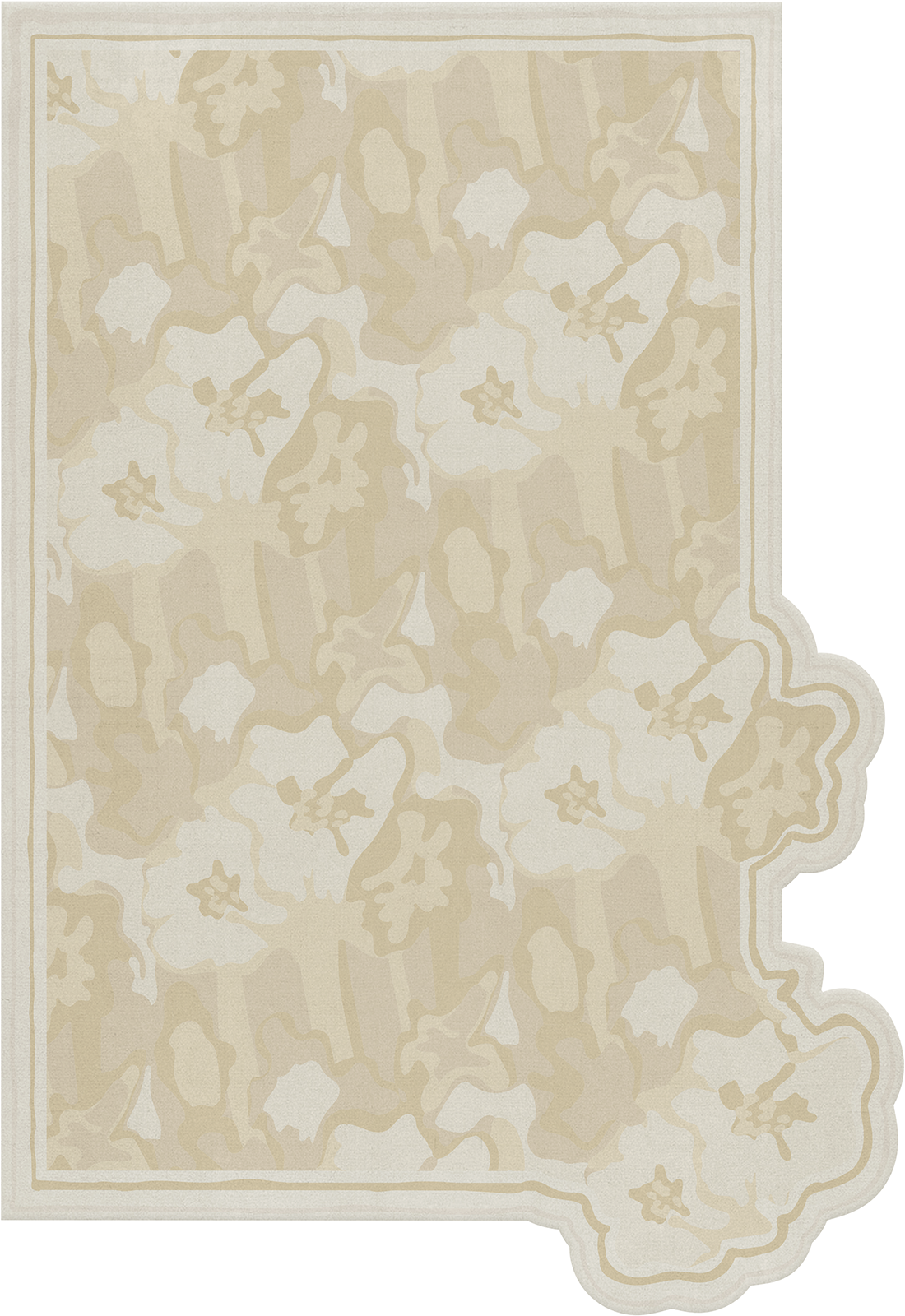
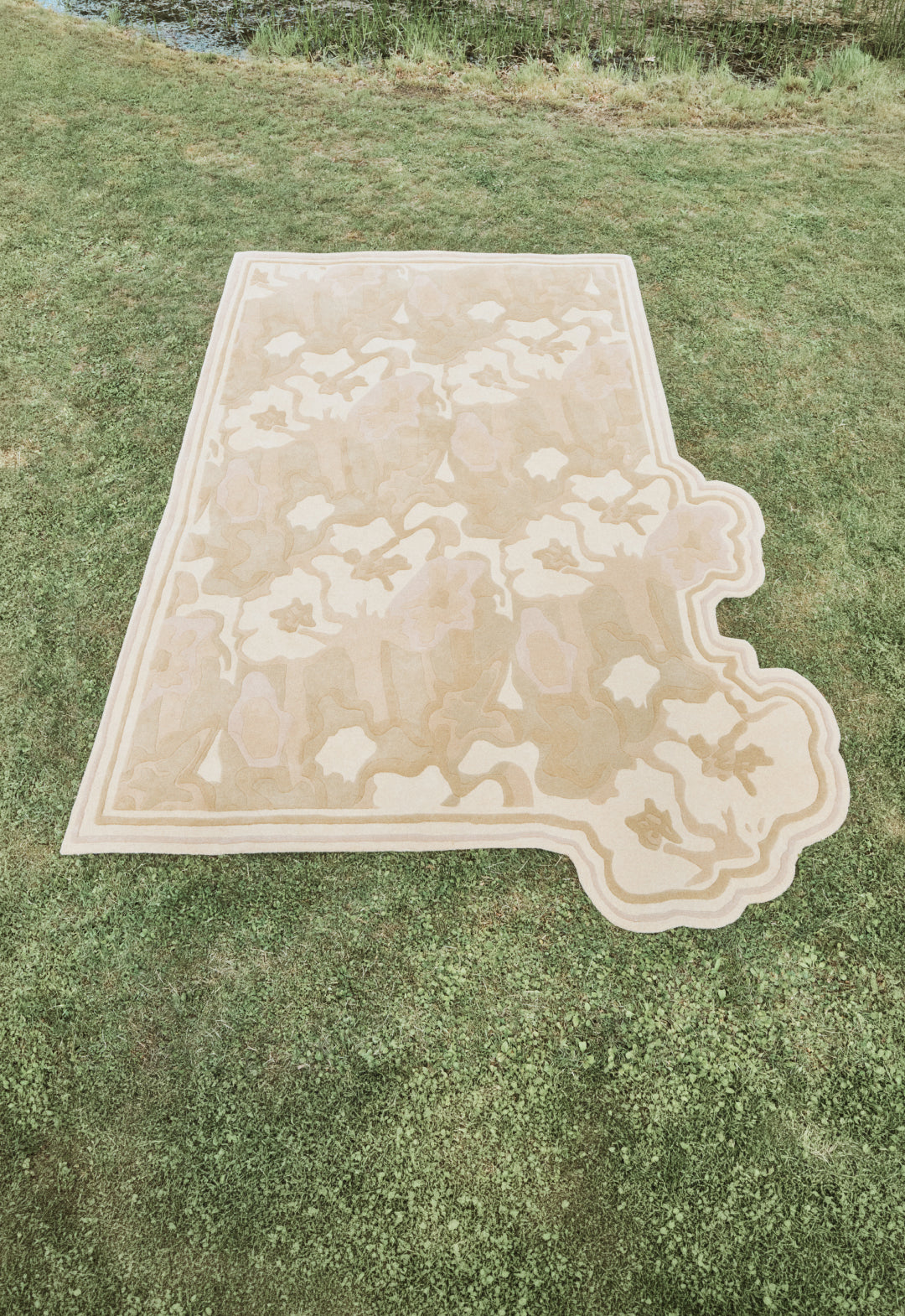
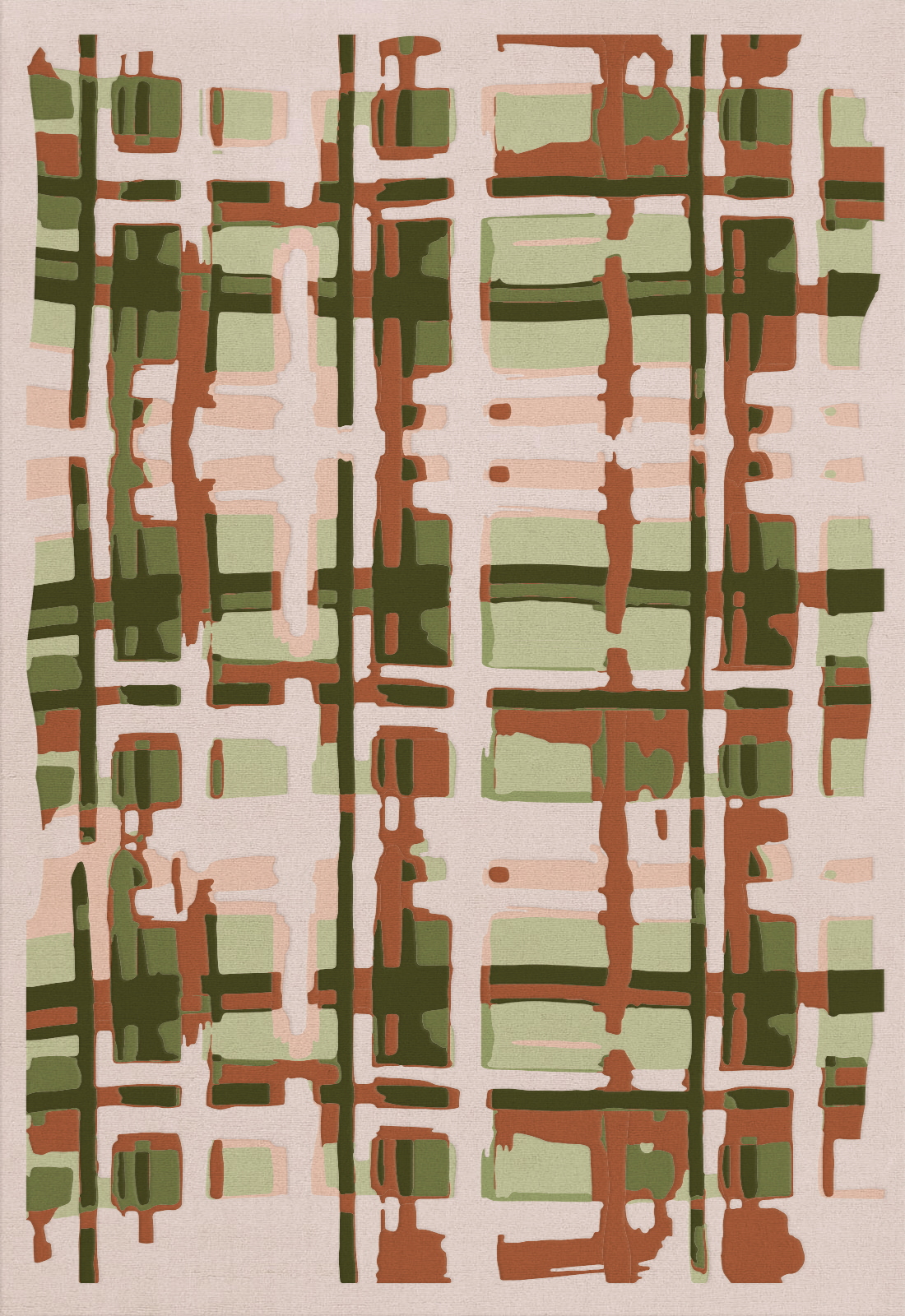
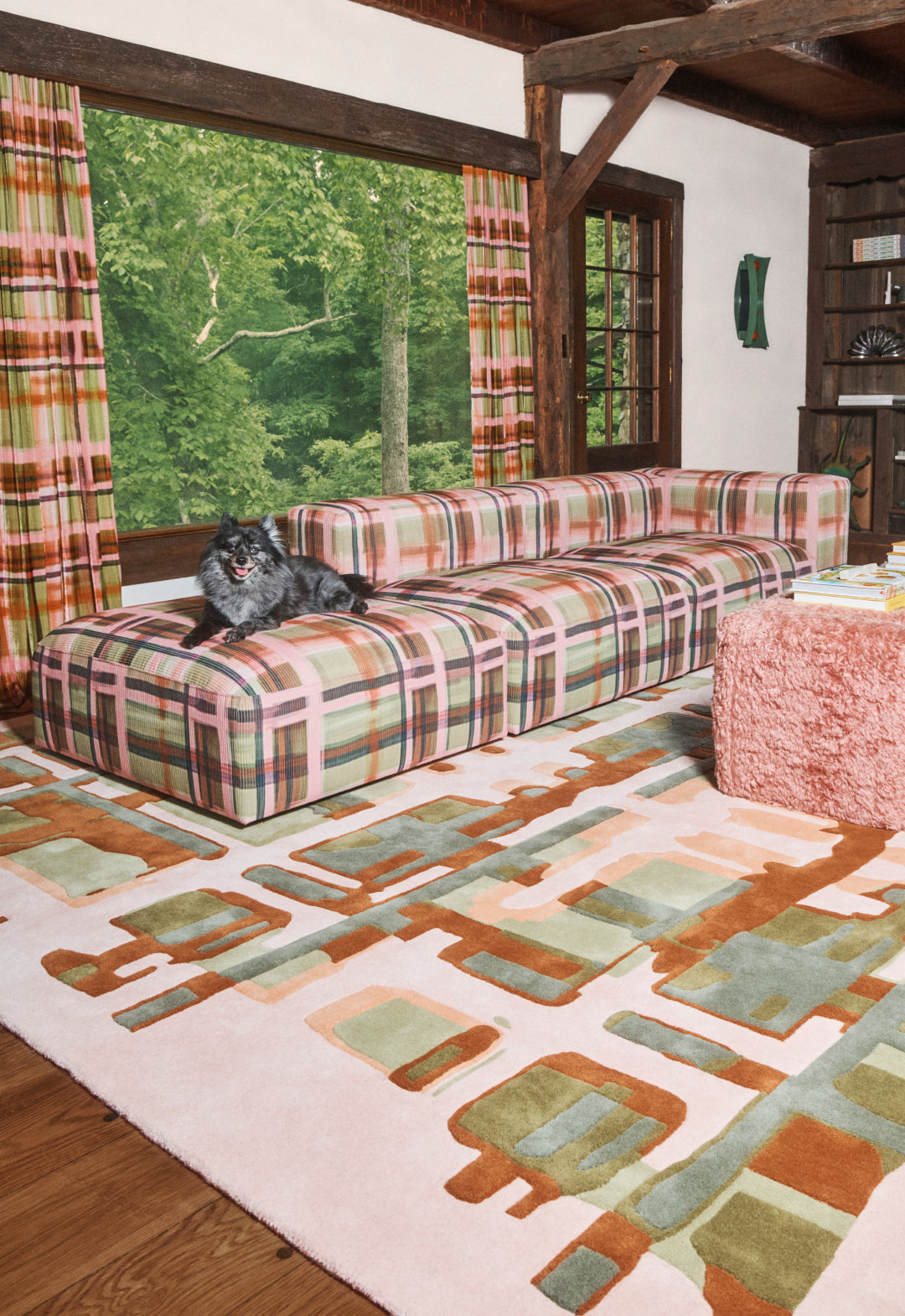
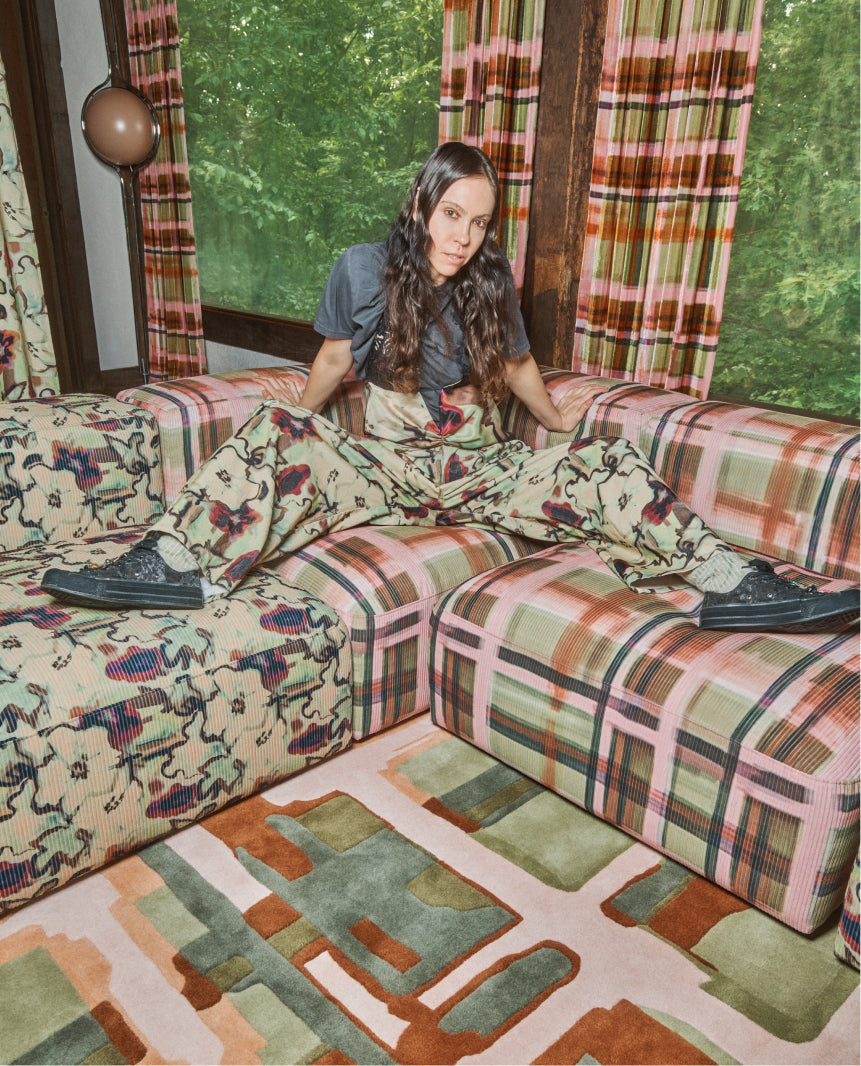
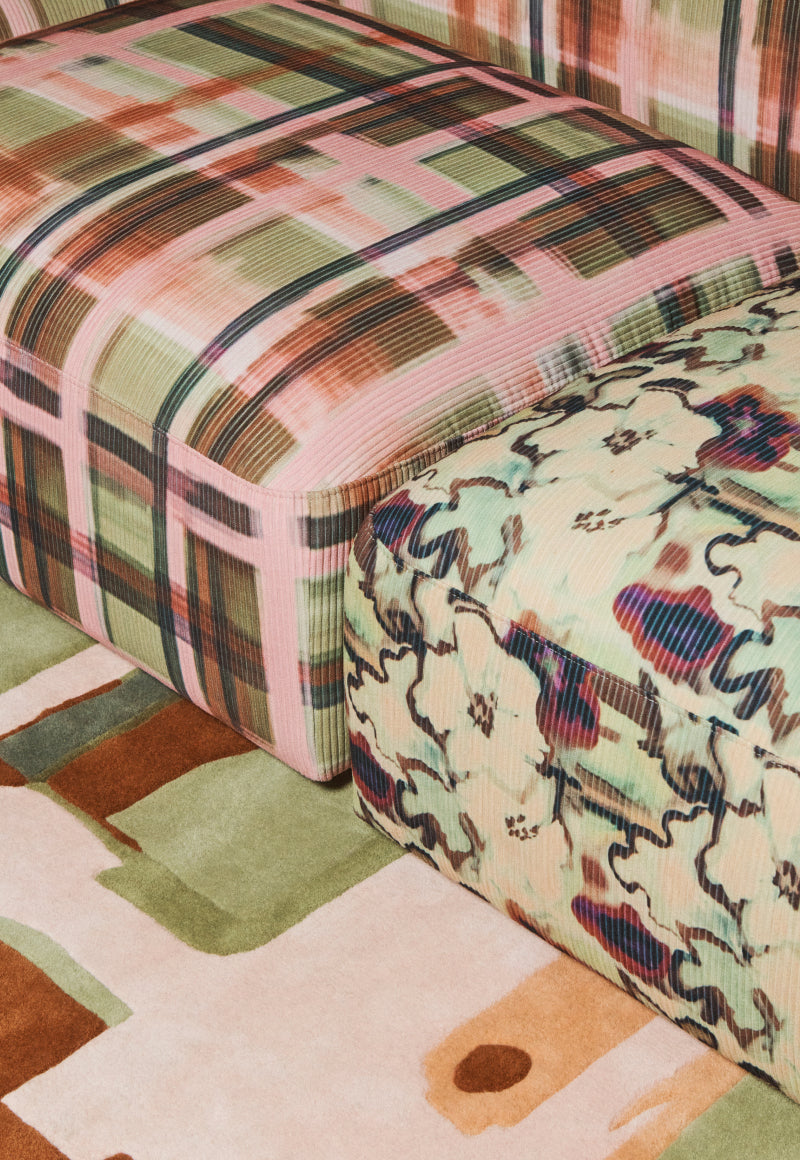
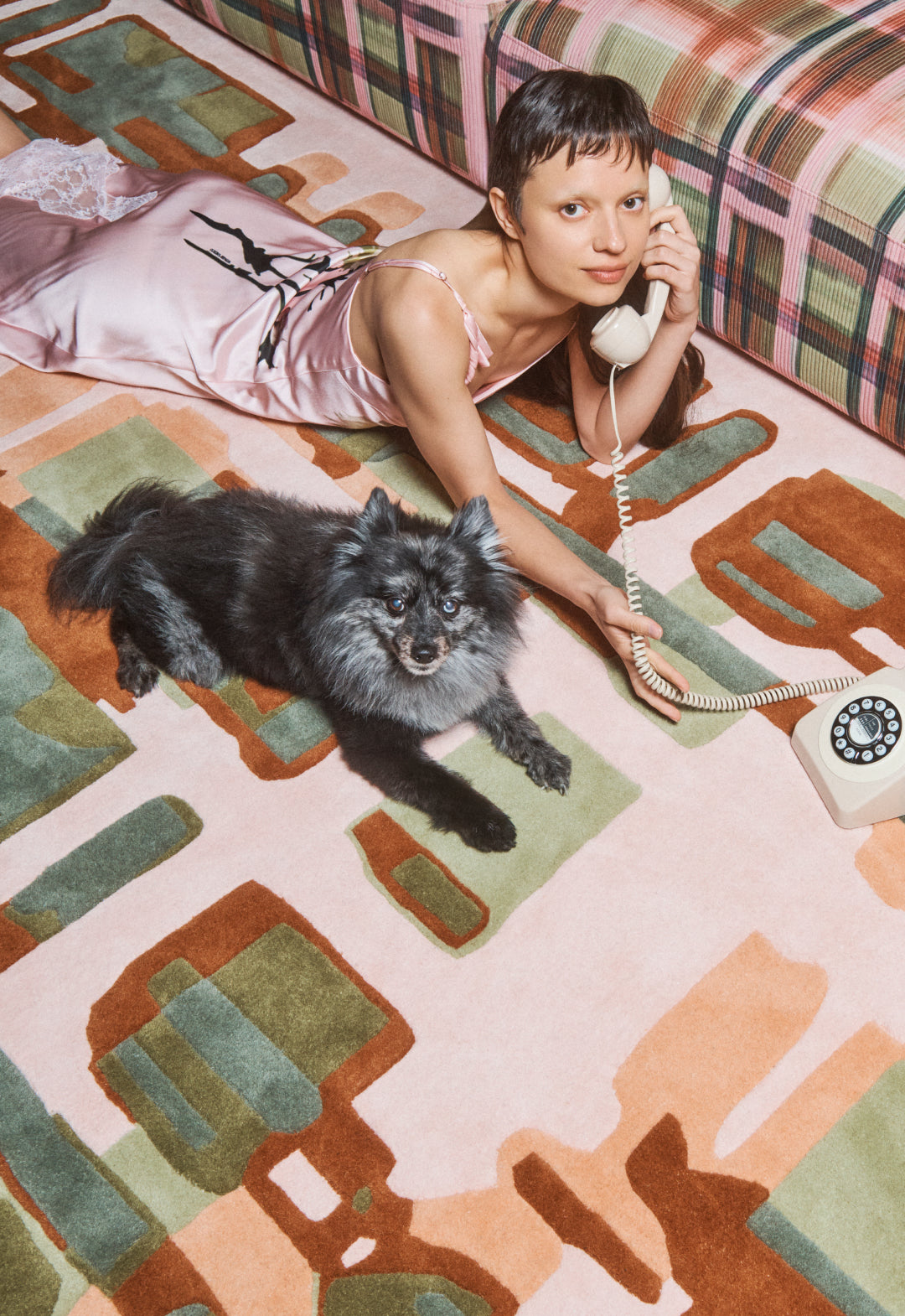
Some designs translate prints directly from our universe—including a pattern featured in our flagship store—creating seamless continuity between fashion and interiors. We also developed sculptural, organic shapes that feel less like traditional floor coverings and more like independent objects within a space. The plaid program, for instance, originated on our AW26 runway. I loved bringing that specific energy into the home—expressive and unexpected, yet warm and livable.
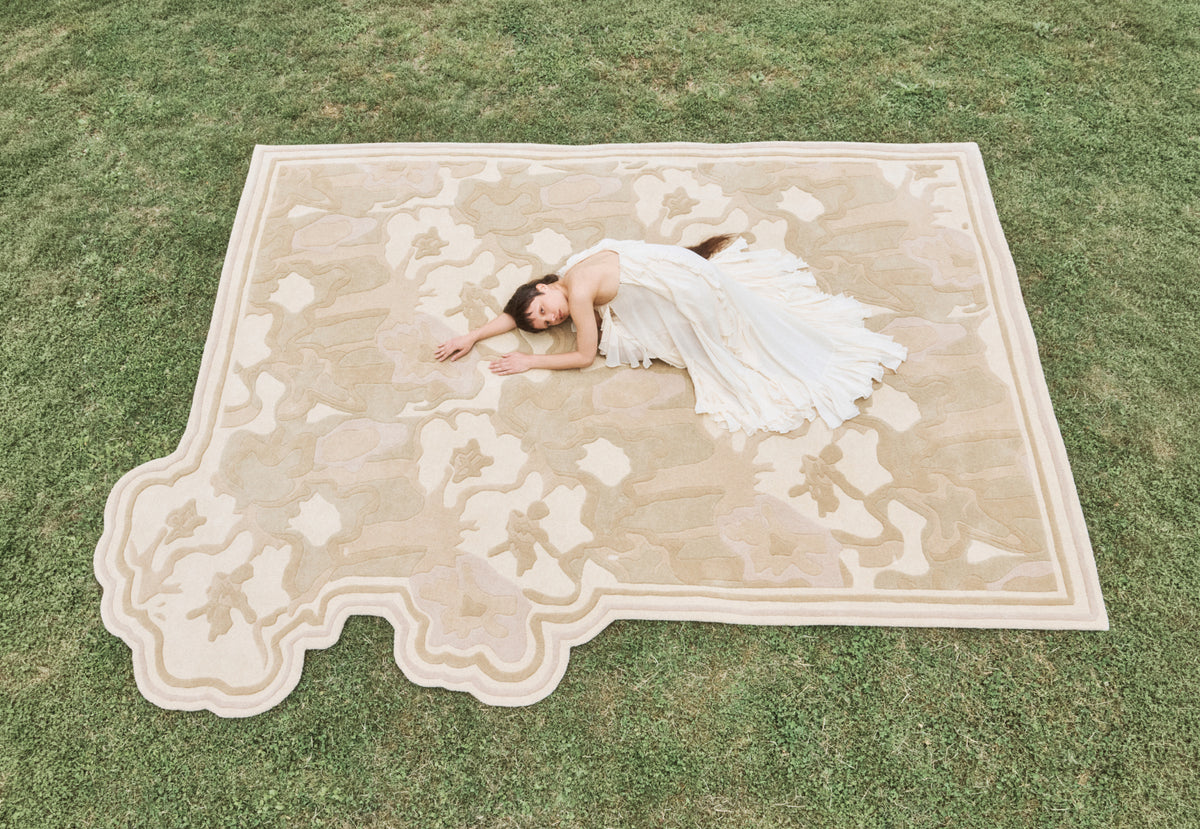
How is the Collina Strada identity materialized through texture and color in these pieces?
It lies in the balance between softness and boldness—rich tactile qualities, irregularity, layered color, and a kinetic energy in the weave. The pieces intentionally lack a rigid finish; they feel lived-in. Color is our primary emotional tool. We paired grounding natural tones like pink and green with contrasting shades to introduce energy and tension, creating an environment that feels like stepping into a physical print.
Your work thrives on friction—balancing beauty with discomfort, fragility with strength. How do you navigate these opposing forces?
My process is equal parts intuitive and research-driven. A collection typically begins with a texture, print, or feeling rather than a finished garment, expanding through references across art, botany, cinema, and digital subcultures. Design-wise, I'm interested in the friction between opposing ideas: beauty and discomfort, fragility and strength, fantasy and realism. Fashion should evoke feeling and foster individuality rather than project manufactured perfection. Sustainability operates within that framework not as a limitation, but as a discipline forcing us to be more inventive.
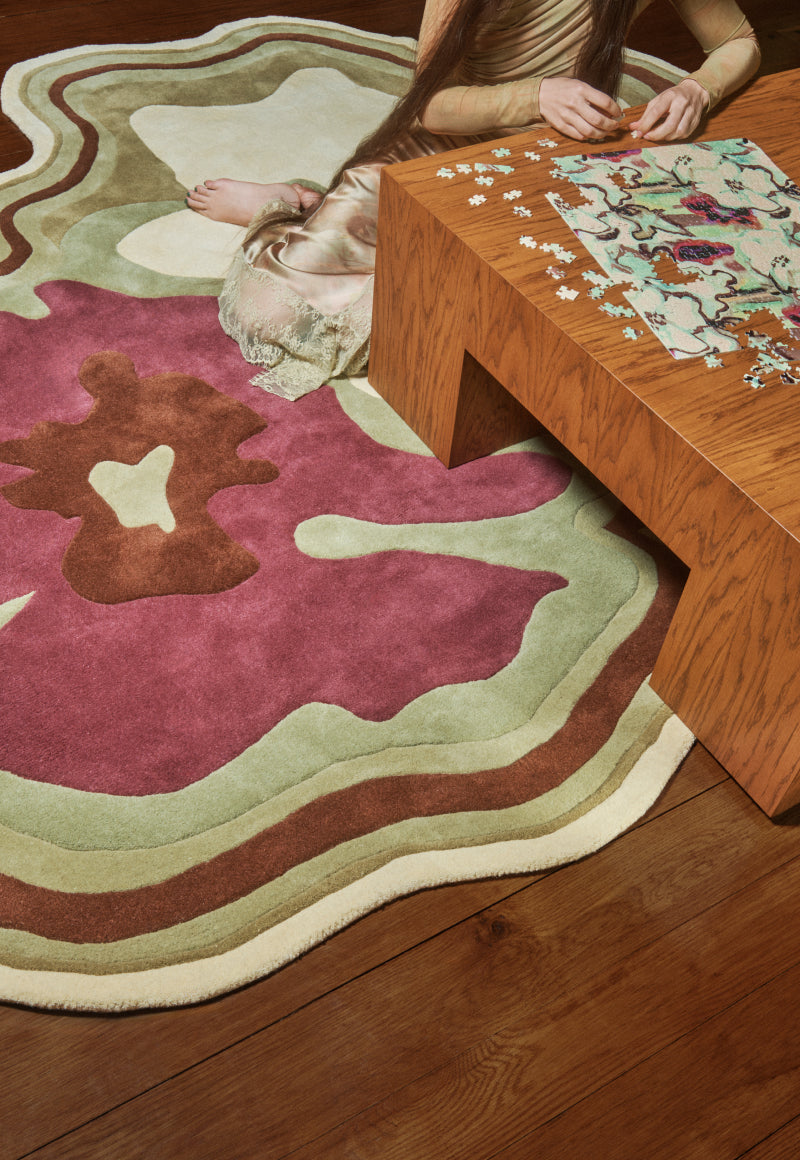
What was the central vision behind your collaboration with LAYERED?
The collection was about translating the Collina Strada universe into an interior space in a way that felt emotional, tactile, and immersive. I wanted these rugs to feel like physical extensions of our world—objects that shift the energy of a room while remaining functional and grounded. We approached both pattern and form with the same instinctual freedom we bring to fashion.
"Layering" is both the core identity of LAYERED and a defining element of Collina Strada. How do you interpret this concept within the collection?
Layering exists in every dimension of my work—visually, emotionally, and conceptually. It means stacking textures, prints, histories, and conflicting ideas. The most compelling work happens when multiple narratives coexist simultaneously. On a personal level, I'm the ultimate advocate for layering; you will rarely catch me outside without multiple layers on. It's the natural bridge between our worlds: a shared appreciation for depth, individuality, and complexity.